
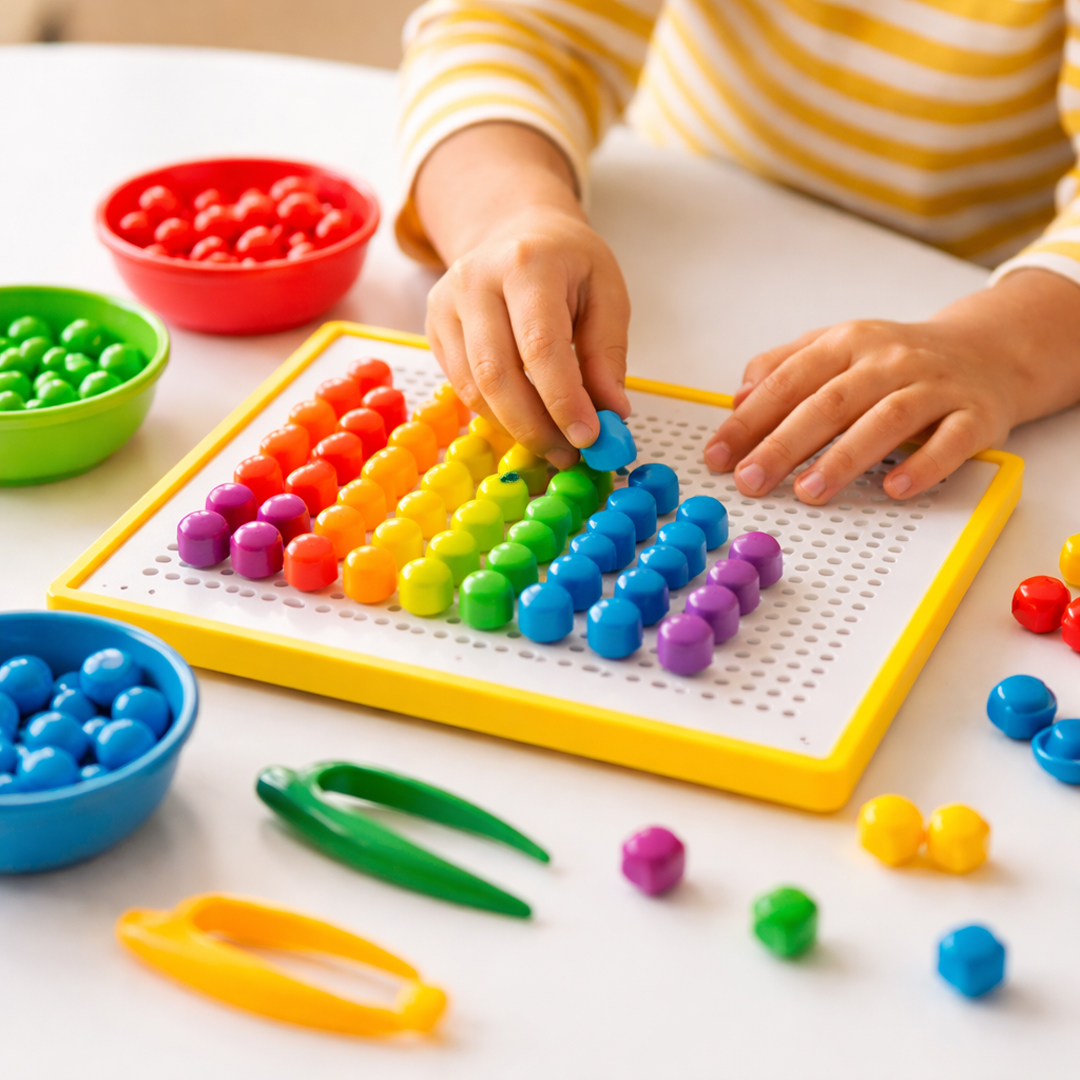
Fine motor skills are the small, precise movements children use with their hands, fingers, and wrists. These skills are essential for everyday tasks such as holding a pencil, doing up buttons, using cutlery, cutting with scissors, building with blocks, and opening containers. Although they may seem simple, fine motor skills form the foundation for independence, confidence, and success at home, at school, and in play.
What are fine motor skills?
Fine motor skills involve coordinated use of the small muscles of the hands and fingers, supported by the wrists, arms, eyes and core body strength. Children rely on these skills for tasks that require control, precision and timing.
Fine motor development includes:
- hand strength
- finger isolation
- grasp development
- hand-eye coordination
- bilateral coordination
- in-hand manipulation
- dexterity
These abilities do not develop overnight. They build gradually through everyday movement, play and practice.
Why fine motor skills matter
Fine motor skills are important because they support a child’s ability to participate in everyday activities with greater ease and independence.
At school
Children use fine motor skills for:
- drawing and colouring
- holding and controlling pencils
- writing letters and numbers
- cutting and gluing
- opening lunchboxes and drink bottles
- using classroom tools and technology
When fine motor skills are underdeveloped, school tasks can feel tiring, frustrating or slow.
At home
Fine motor skills help children manage self-care and daily living tasks such as:
- dressing
- brushing teeth
- feeding themselves
- packing and unpacking bags
- opening containers
- helping with simple chores
These skills are closely linked to growing independence.
In play
Play is one of the main ways children develop fine motor control. Activities such as puzzles, Lego, threading, craft, playdough and construction games all build hand skills while also supporting creativity and problem-solving.
Signs a child may be finding fine motor skills challenging
Every child develops at their own pace, but some signs may suggest a child needs extra support. These can include:
- avoiding drawing, colouring or writing tasks
- switching hands often
- using too much or too little pressure with a pencil
- messy or hard-to-read handwriting
- difficulty using scissors
- struggling with buttons, zips or fasteners
- tiring quickly during table-top tasks
- clumsiness with small objects
- frustration with tasks that need hand control
A child does not need to show all of these signs to benefit from support.
What skills support fine motor development?
Fine motor skills are built on a range of underlying abilities. These include:
Hand strength
Children need strength in their hands and fingers to grasp, squeeze, pinch and control objects.
Core and shoulder stability
Strong “bigger” muscles help provide a stable base for precise hand movements. If the shoulders and core are weak, fine motor tasks often feel harder.
Bilateral coordination
This is the ability to use both hands together in a coordinated way, such as holding paper with one hand while cutting with the other.
Hand-eye coordination
Children need to visually guide their hand movements when drawing, stacking, threading or placing objects.
In-hand manipulation
This is the ability to move and adjust an object within the hand, such as turning a pencil or shifting coins from palm to fingertips.
Sensory processing
Some children need support to notice, interpret or respond to touch and movement information, which can affect how they use their hands.
How to build fine motor skills through play
The good news is that fine motor skills can often be strengthened through fun, engaging everyday activities. We have some ideas below to get you started!
1. Play with playdough
Rolling, pinching, squeezing, poking and hiding small items in playdough helps strengthen little hands.
- roll snakes and balls
- make shapes and letters
- use cutters or child-safe tools
- hide beads or buttons to find
2. Encourage threading and beading
Threading helps with hand-eye coordination, bilateral coordination and finger control.
- large beads on string
- pasta necklaces
- threading cards
- pipe cleaners with beads
3. Use tongs, tweezers or pegs
These activities develop finger strength and a pincer grasp. Ideas:
- transfer pom-poms with tongs
- pick up small toys with tweezers
- clip pegs onto cardboard
- sort objects by colour or size
4. Offer cutting and craft activities
Craft supports many fine motor skills at once.
- snip paper strips
- cut along thick lines
- paste shapes
- tear paper for collage
- fold simple paper creations
5. Build with blocks and construction toys
Construction play supports hand strength, motor planning and coordination.
- Lego
- magnetic tiles
- interlocking blocks
- nuts and bolts toys
6. Try drawing and pre-writing play
Make these activities fun and pressure-free.
- draw in sand or shaving foam
- trace lines in salt trays
- colour vertical surfaces like easels or windows
- use chunky crayons or broken crayons to encourage a better grasp
7. Include everyday life tasks
Daily routines provide natural opportunities for practice.
- opening containers
- pouring water
- using child-safe cutlery
- helping with cooking
- buttoning doll clothes
- packing lunch items into a bag
Simple tips for parents and carers
- Keep activities playful and age-appropriate.
- Start with short bursts of practice.
- Focus on effort, not perfection.
- Give children chances to repeat familiar activities.
- Make sure seating and posture support success.
- Build hand skills in daily routines, not just at the table.
- Celebrate small improvements.
When to seek support from an occupational therapist
If a child’s fine motor difficulties are affecting their participation, confidence, learning or independence, an occupational therapist can help. OT support may include:
- identifying the underlying reasons for the difficulty
- assessing hand strength, grasp, coordination and motor planning
- providing targeted activities and strategies
- supporting school readiness and handwriting
- helping families build skills through practical home routines
Early support can make everyday tasks easier and help children feel more capable in their world.
If you are concerned about your child’s hand skills, school readiness or independence with everyday tasks, our occupational therapists can provide guidance tailored to your child’s needs.